Latest Blog Posts
-

-

-

-

-

-

-

-

Why Successful Local Brands Fail When Scaling
May 25, 2026
-

-

Mar 12
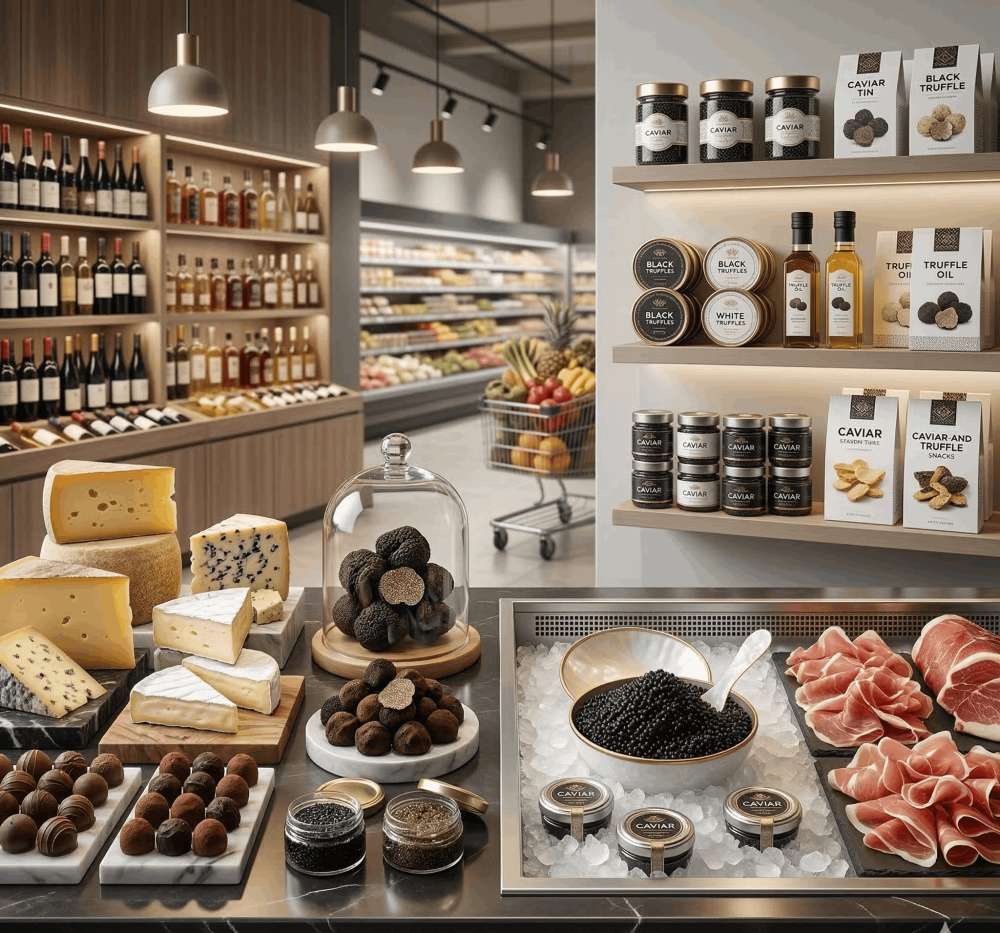
Mass-market delicacies: how caviar and truffles are making their way into supermarkets
When luxury becomes more accessible
Until recently, delicacies such as caviar, truffles, oysters, ham, or aged cheeses were perceived as products for special occasions. They could be found in fine dining restaurants, specialty food stores, or on holiday tables. Purchasing such products was considered an event and associated with wealth.
However, in recent years, the situation has changed significantly. Increasingly, delicacies are appearing in regular supermarkets and even convenience stores. A jar of caviar next to dairy products, truffle oil in the sauce section, sliced ham next to regular meats—such juxtapositions are becoming commonplace.
This shift reflects a broader trend in retail: premium products are gradually being integrated into the mass-market assortment. For retailers, this is a way to expand marginal categories, and for consumers, an opportunity to add elements of gastronomic luxury to their everyday lives.
What has changed the gourmet food market?
The growing presence of gourmet foods in supermarkets is linked to several structural changes in the market.
Globalization of supply
Modern supply chains and cold chain logistics have significantly expanded the geography of gastronomic products. Products that were previously available only in their places of origin can now be transported thousands of kilometers without significant loss of quality.
As a result:
• seafood and caviar are supplied via international cold chains
• european deli meats are sold in new markets
• truffle products are processed and packaged for long-distance transport
The globalization of logistics has made delicacies less tied to their region of origin.
Growing number of producers
Many products previously considered strictly regional are now produced in multiple countries and regions.
For example:
• alternative types of caviar
• new regions for truffle production
• expansion of aged cheese production
Competition between producers is gradually reducing prices and expanding supply.
New packaging formats
Retail has played a key role in the "democratization" of delicacies. Chains have learned to adapt expensive products to the mass market.
Instead of large packaging, the following are increasingly being used:
• mini-jars of caviar
• small portions of ham or prosciutto
• truffle sauces and pastes
• tasting packs of premium cheeses
This format lowers the barrier to entry: customers can try the product without spending a significant amount.
Delicacies as part of everyday gastronomy
Changing consumer behavior also plays a significant role.
Consumers are increasingly seeking a culinary experience, not just a product. Even in everyday cuisine, interest in new flavors, combinations, and ingredients is emerging.
In this context, delicacies are beginning to be perceived not as a rare luxury, but as an element of dietary diversity.
The trend toward affordable luxury is particularly noticeable. It manifests itself in various categories:
• specialty coffee
• artisan chocolate
• premium sauces
• small portions of delicacies
Consumers are willing to pay a little more for a product that creates a sense of special occasion, even if it's an everyday dinner.
How retailers are adapting delicatessen products for the mass market
Retailers are actively developing strategies to sell delicatessen products to a wider audience.
Mini-Formats
Small packaging makes products more accessible and encourages impulse purchases.
Tastings and promotions
Delicacies often require familiarization. Therefore, chains utilize tastings, temporary promotions, and themed gastronomic weeks.
Lifestyle marketing
Marketing is increasingly portraying delicacies as part of everyday lifestyle, rather than as a purely festive product.
Gastronomic zones
Many supermarkets are establishing separate zones for cheeses, deli meats, sauces, and wine, creating an atmosphere of culinary choice.
Risks of expanding the mass market
The expansion of the deli market also brings certain challenges.
Declining quality
As production volumes increase, some products may lose their authenticity or be replaced by cheaper alternatives.
Dilution of exclusivity
Part of the value of delicacies stems from a sense of rarity. The greater their availability, the more difficult it is to maintain this effect.
Economic sensitivity
The "affordable luxury" category is directly dependent on consumer confidence. When the economic situation worsens, consumers often reduce their purchases of this type.
The future of the delicatessen market
Despite the risks, analysts believe that the integration of premium products into mass retail will continue.
Consumers are increasingly seeking:
• new gastronomic experiences
• variety of flavors
• products with a history and provenance
As a result, delicatessen products could occupy a stable niche between the premium segment and everyday consumption.
Probable market development models include:
• compact packaging
• more affordable versions of premium products
• expanded supermarket assortment
• combining gastronomy and lifestyle marketing
Bottom Line
Delicacies are gradually moving out of the narrow premium segment and into the everyday supermarket assortment.
For retailers, this is an opportunity to increase margins and diversify their offerings. For consumers, it's a way to add culinary variety to their everyday diet.
In the long term, those producers and chains that can maintain a balance between affordability, quality, and the sense of uniqueness will win.
Your experience matters! Take a short survey and see how others answered. Take part